Reference
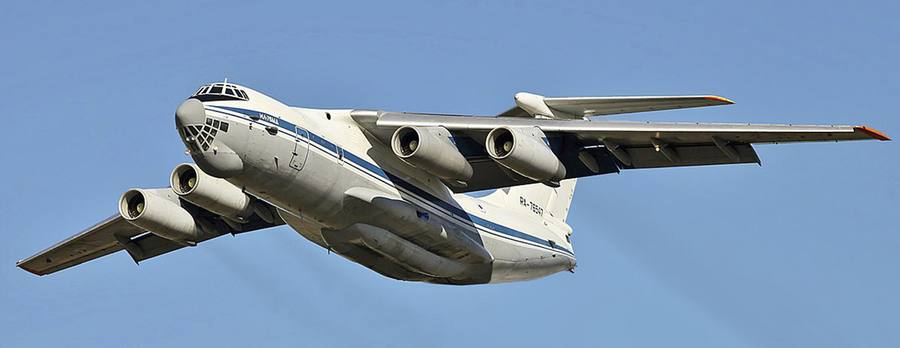
Ilyushin Il-76TD
The rough-field ramp freighter. Payload, cargo hold, door size and typical role below.
- Maximum payload
- 48,000 kg
- Cargo volume
- 180 m³
- Cargo hold (L × W × H)
- 20.00 × 3.45 × 3.40 m
- Cargo door
- 3.45 × 3.25 m
About the Ilyushin Il-76TD
A high-wing ramp freighter designed to work from unpaved and poorly equipped strips, with a rugged multi-wheel undercarriage built for rough surfaces.
That capability is the point: it delivers heavy and outsize cargo to places with no cargo handling infrastructure at all, which is why it remains a fixture of humanitarian, mining and remote-project logistics.
What it carries
How it is built
- A cargo hold sized around the load rather than around passengers, with a near-constant cross-section along its length.
- Ramp access (a nose door, a tail ramp, or both) so cargo can be driven or winched straight in at floor level.
- A reinforced floor rated for concentrated point loads, with heavy lashing points set into the structure.
- A high-wing layout on the ramp freighters, which puts the floor close to the ground and keeps the hold clear of the wing box.
- On-board cranes and winches on some types, so the aircraft can load itself where no ground equipment exists.
Why it is used
- Carries pieces that cannot be broken down: turbines, generators, locomotives, satellites, other aircraft.
- Ramp loading removes the need for a main-deck loader, opening up airports with almost no cargo infrastructure.
- Self-loading equipment makes the aircraft viable into remote and disaster-relief destinations.
What to check before booking
- Charter rather than scheduled service, so lead times and pricing are negotiated per movement.
- The fleet is small and demand is lumpy; availability is the usual constraint rather than capacity.
- Outsize loads need survey, engineering and often a bespoke cradle before the aircraft is even booked.
Track your air cargo
Follow an air waybill from acceptance to delivery with live status and ETAs across every major carrier.