Reference
Dornier 228
A light STOL twin for short strips. Payload, cargo hold, door size and typical role below.
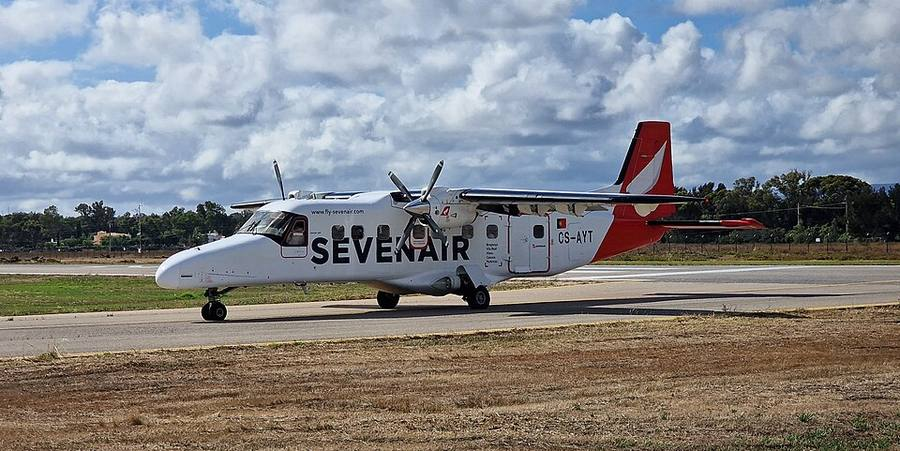
- Maximum payload
- 1,950 kg
- Cargo volume
- 18 m³
- Cargo hold (L × W × H)
- 7.08 × 1.34 × 1.55 m
- Cargo door
- 1.33 × 1.38 m
About the Dornier 228
A light twin turboprop with short take-off performance and a large rear cargo door.
It reaches unpaved and very short strips that nothing larger can use, which makes it a survey, island-hopping and remote-resupply aircraft as much as a freighter.
What it carries
How it is built
- A regional turboprop airframe converted to freight: cabin stripped, floor reinforced and a cargo door cut into the fuselage side.
- A side door rather than a ramp, so cargo is loaded piece by piece or on small pallets rather than driven aboard.
- Tie-down rails set into the floor, and a net or barrier separating the hold from the flight deck.
- Turboprop engines and a low approach speed, which is what lets these aircraft use short and lightly built runways.
Why it is used
- Economic on thin routes where even a narrowbody jet freighter would fly mostly empty.
- Operates from short regional strips that no jet freighter can use.
- Low block-hour cost, which suits scheduled feeder work and time-critical small consignments.
- Quick turnarounds, so a single aircraft can fly several sectors a day around a regional network.
What to check before booking
- Payload is a few tonnes, so anything substantial needs multiple rotations or a larger type.
- The side door limits piece size: nothing that will not turn through the opening.
- Range is short; these are feeder and regional aircraft, not line-haul equipment.
Track your air cargo
Follow an air waybill from acceptance to delivery with live status and ETAs across every major carrier.