Reference
Boeing 767-300F
The medium widebody standard. Payload, cargo hold, door size and typical role below.
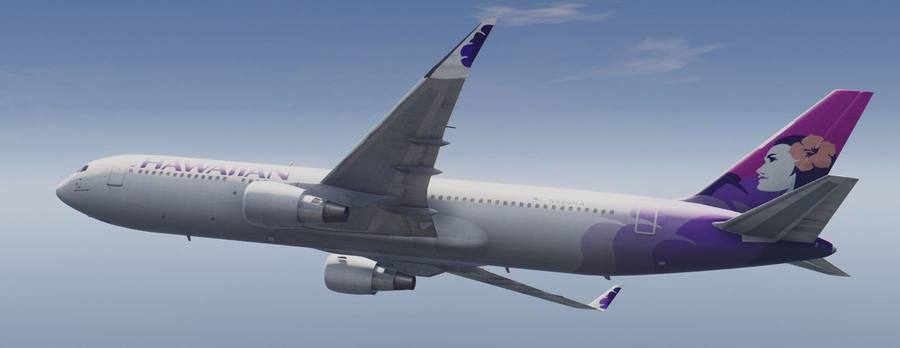
- Maximum payload
- 57,000 kg
- Cargo volume
- 450 m³
- Cargo hold (L × W × H)
- 38.90 × 4.50 × 2.50 m
- Cargo door
- 3.40 × 2.50 m
About the Boeing 767-300F
A medium widebody freighter at roughly half the payload of a 777F, built new and also converted from passenger aircraft in large numbers.
It is the backbone of the integrators' widebody fleets and of medium-haul cargo generally: enough capacity to consolidate a network's freight, small enough to fill on routes where a 777F would fly with empty positions.
What it carries
How it is built
- A main deck cleared of cabin fittings and floored to take pallets and containers, with a cargo door in the forward or aft fuselage large enough to accept a full-height pallet.
- A powered roller and ball-mat floor system that lets a loaded pallet be pushed into position by one handler rather than lifted.
- Locks in the floor that engage the pallet base and hold the load against flight loads without separate lashing.
- A rigid barrier behind the flight deck separating the crew from the cargo compartment, with a smoke-detection and suppression system covering the deck.
- Lower-hold compartments retained under the main deck, taking the same LD-series containers a passenger aircraft carries.
Why it is used
- The highest payload and volume of any air freight equipment, which is what makes long-haul air cargo economic at all.
- Takes standard ULDs, so the load is built up away from the aircraft and craned aboard in minutes.
- Main-deck height accepts tall and awkward pieces that would never fit a belly hold.
- Long range with a full load, so intercontinental sectors fly without a technical stop.
What to check before booking
- Needs a main-deck loader and a widebody-capable stand, which limits the airports that can handle it.
- Payload and range trade against each other: a full structural payload usually means a shorter sector.
- Freighter capacity is concentrated in a few hubs, so the routing may add a road leg at either end.
Track your air cargo
Follow an air waybill from acceptance to delivery with live status and ETAs across every major carrier.