Reference
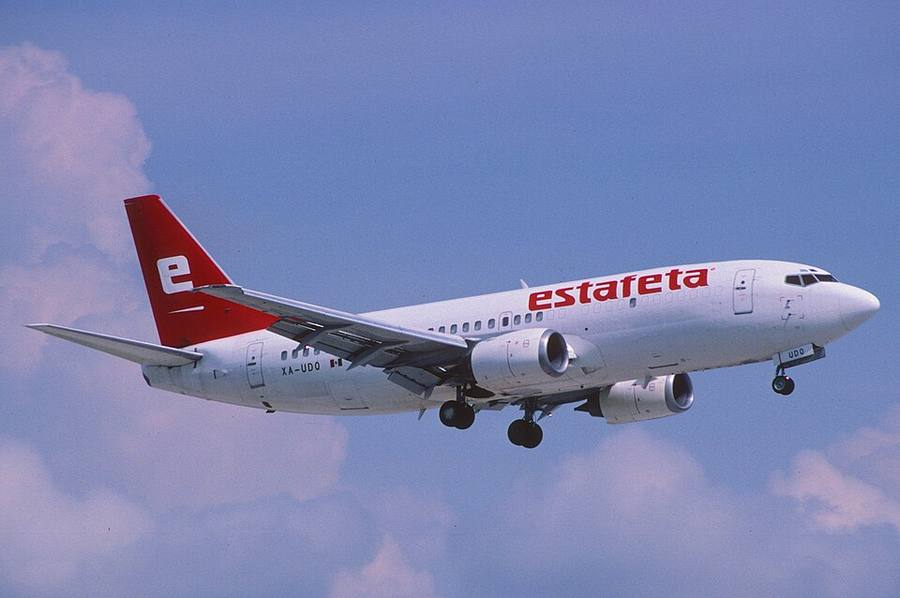
Boeing 737-300F
The earlier 737 conversion. Payload, cargo hold, door size and typical role below.
- Maximum payload
- 19,460 kg
- Cargo volume
- 130 m³
- Cargo hold (L × W × H)
- 23.24 × 3.17 × 2.14 m
- Cargo door
- 3.48 × 2.16 m
About the Boeing 737-300F
An earlier-generation 737 conversion, still working regional feeder and express networks.
Payload sits a little under the -400F on a shorter fuselage. Both do the same job: moving freight between secondary airports and the hubs where widebody freighters load.
What it carries
How it is built
- A converted passenger airframe: cabin stripped, floor reinforced, and a large cargo door cut into the forward left fuselage.
- A rigid 9g barrier immediately aft of the flight deck, protecting the crew if the load shifts.
- A powered floor system sized for the narrower single-aisle pallets and containers rather than full widebody ULDs.
- Windows plugged and the cabin systems removed, cutting weight and simplifying the shell.
Why it is used
- Economic on the short and medium sectors where a widebody freighter would fly half empty.
- Operates from a far wider range of airports, including those with no widebody handling.
- Conversion of an existing airframe costs a fraction of a new-build freighter, which is why the segment keeps growing.
- Frequency over capacity: several daily rotations suit express and e-commerce traffic better than one large flight.
What to check before booking
- Payload and volume are a fraction of a widebody, so a large consignment will need several rotations.
- The main deck takes narrowbody ULDs, not the full-size pallets used on widebody equipment.
- Range is limited; intercontinental work needs a fuel stop or a different aircraft.
Track your air cargo
Follow an air waybill from acceptance to delivery with live status and ETAs across every major carrier.