
Reference
Wood Chip
High-volume, low-density holds. What it carries, how it is built and the limits that define the class.
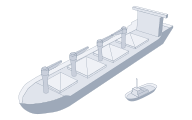
- Cargo gear
- Usually fitted with unloading conveyors or cranes
- Capacity measured in
- Hold volume in cubic metres
- Typical size
- Commonly 40,000-60,000 DWT with very large hold volume
- Cargo type
- Wood chips
About wood chip carriers
Bulk carriers with unusually large hold volume for their deadweight, built for a cargo that fills the space long before it reaches the weight limit.
Wood chips are very light for their bulk, so these ships are designed around cubic capacity rather than tonnage. Hulls are deep and boxy, and the superstructure is often raised to preserve visibility over a high deck cargo.
They serve the pulp and paper industry, running from forestry regions to mills, and many carry their own discharge equipment because chip terminals are frequently remote.
What it carries
How it is built
- A hull and equipment fit built around one cargo type rather than general trade.
- Purpose-built handling gear, from heavy-lift derricks and stern or side ramps to ventilation systems and refrigeration plant, depending on the trade.
- Structure reinforced where that specific cargo demands it, whether for point loads, vehicle decks or multiple tween decks.
Why it is used
- Handles cargo that no general-purpose ship can take safely or economically.
- Purpose-built handling equipment keeps port time short in trades where shore facilities are limited.
- Often the only practical option for the trade it serves.
What to check before fixing
- A narrow trade means limited availability and less competitive pricing than open-market tonnage.
- Ballast legs are common, because the specialised fit often has no return cargo.
- Many of these trades carry their own regulatory regime on top of normal cargo rules.
Track the ship as well as the box
Follow any vessel and its schedule, with live position, port calls and ETAs across the world fleet.