
Reference
Gas Carriers
Cargo carried refrigerated or pressurised. What it carries, how it is built and the limits that define the class.
- Cargo gear
- Self-discharging by cargo pump
- Capacity measured in
- Cargo volume in cubic metres
- Typical size
- LNG carriers commonly 145,000-174,000 m³
- Cargo type
- Liquefied gases
About gas carriers
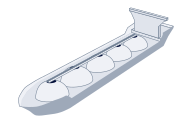
Ships carrying gases held as liquid, either refrigerated to their boiling point, pressurised, or both. LNG carriers hold cargo at about minus 162 degrees Celsius; LPG carriers work at less extreme conditions.
Capacity is quoted in cubic metres rather than deadweight, because the cargo is light in relation to its volume. The tanks are the defining feature: heavily insulated membrane or independent spherical designs, the latter giving the distinctive domes on deck.
Some boil-off is unavoidable on a refrigerated cargo, and modern LNG ships are designed to burn it as fuel rather than waste it, which also makes them among the cleanest-burning ships in service.
What it carries
How it is built
- Ethylene carriers form a third class alongside LNG and LPG ships, built for smaller parcels and able to handle cargo at the temperatures ethylene requires.
- A double hull, with cargo tanks separated from the sea by ballast space on the sides and bottom. Mandatory under MARPOL for oil tankers.
- Cargo divided between several tanks, with longitudinal and transverse bulkheads limiting the free surface effect of liquid movement.
- An inert gas system that keeps tank atmospheres below the oxygen level at which the vapour space could ignite.
- Cargo pumps and a fixed pipeline system with a manifold amidships, so the ship discharges its own cargo.
- Heating coils in tanks intended for cargo that must stay warm enough to pump.
Why it is used
- Moves very large volumes of liquid with no packaging at all.
- The ship discharges itself, so terminals need pipework and storage rather than heavy lifting equipment.
- Segregated tanks allow several grades to travel on the same voyage without mixing.
What to check before fixing
- Tank cleaning between cargoes takes time and cost, and the previous cargoes carried determine what may be loaded next.
- Vetting inspections by oil majors govern which ships are acceptable, over and above class and flag requirements.
- Pollution liability is severe, and both the ship and the terminal operate under strict transfer procedures.
Track the ship as well as the box
Follow any vessel and its schedule, with live position, port calls and ETAs across the world fleet.