
Reference
General Cargo
The versatile multipurpose ship. What it carries, how it is built and the limits that define the class.
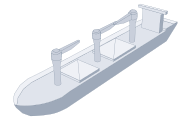
- Cargo gear
- Almost always geared
- Capacity measured in
- Deadweight tonnes, plus bale and grain hold capacity
- Typical size
- Commonly 5,000-30,000 DWT
- Cargo type
- Mixed parcels, break-bulk and unitised
About general cargo ships
The multipurpose ship that carries cargo which does not suit a bulker, a tanker or a container ship. Bagged goods, steel products, timber, machinery, project pieces and containers often travel on the same voyage.
Tween decks are the defining feature: movable decks that split the hold height so light cargo can be stowed above heavy without crushing it. Holds are frequently box-shaped so containers stow neatly alongside loose cargo.
Because these ships carry their own cranes, they can work in ports with little or no shore equipment. That independence is why they remain the backbone of trade to developing and secondary ports long after containerisation took over the main lanes.
What it carries
How it is built
- Holds are segmented, which keeps separate consignments physically isolated from one another. That matters most for fragile or high-risk cargo travelling alongside other goods.
- Construction is deliberately robust, so the ship stays serviceable in ports with little infrastructure.
- Multiple decks, with tween decks that can be raised or lowered to divide the hold height for different cargoes.
- Large hatch openings and, almost always, the ship's own cranes or derricks.
- Strengthened tank tops and lashing points throughout, since cargo is secured piece by piece rather than in cells.
- Holds that can be box-shaped to take containers as well as loose and palletised cargo.
Why it is used
- Carries almost anything: bagged and palletised goods, steel, timber, project pieces and containers on the same voyage.
- Ship's gear makes it independent of shore cranes, which matters in developing and secondary ports.
- The practical answer for parcels too small for a bulker and unsuited to a box.
What to check before fixing
- Loading and discharge are slow compared with bulk or container handling, because each piece is worked individually.
- Stowage and securing depend heavily on the skill of the planners and stevedores.
- Port time and cargo handling costs are a much larger share of the voyage economics.
Track the ship as well as the box
Follow any vessel and its schedule, with live position, port calls and ETAs across the world fleet.