
Reference
Chemical Tankers
Segregated stainless or coated tanks. What it carries, how it is built and the limits that define the class.
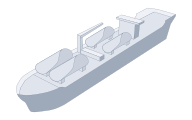
- Cargo gear
- Self-discharging, often with one pump per tank
- Capacity measured in
- Deadweight tonnes (DWT)
- Typical size
- Commonly 5,000-50,000 DWT
- Cargo type
- Bulk liquid chemicals
About chemical tankers
The most technically demanding tankers, built to carry bulk liquid chemicals, many of them corrosive, toxic or reactive.
Tanks are stainless steel or specially coated, and typically each has its own pump and pipeline so cargoes never share a line. A single ship may carry twenty or more separate parcels, each with its own handling and compatibility requirements.
They trade under the IMO's IBC Code, which classifies ships by the hazard of the cargo they may carry. Tank cleaning between cargoes is exacting, and the previous cargo history determines what may be loaded next.
What it carries
How it is built
- The IBC Code sorts chemical tankers into three ship types by the hazard of the cargo they may carry. Type 1 is for the products presenting the greatest hazard, and must survive the most severe damage standard with its tanks set the furthest inboard from the shell. Type 2 covers appreciably hazardous cargo requiring significant preventive measures, and Type 3 cargo of lesser hazard needing a moderate degree of containment.
- Tanks are stainless steel, or coated, so the cargo cannot react with the tank itself.
- A double hull, with cargo tanks separated from the sea by ballast space on the sides and bottom. Mandatory under MARPOL for oil tankers.
- Cargo divided between several tanks, with longitudinal and transverse bulkheads limiting the free surface effect of liquid movement.
- An inert gas system that keeps tank atmospheres below the oxygen level at which the vapour space could ignite.
- Cargo pumps and a fixed pipeline system with a manifold amidships, so the ship discharges its own cargo.
- Heating coils in tanks intended for cargo that must stay warm enough to pump.
Why it is used
- Moves very large volumes of liquid with no packaging at all.
- The ship discharges itself, so terminals need pipework and storage rather than heavy lifting equipment.
- Segregated tanks allow several grades to travel on the same voyage without mixing.
What to check before fixing
- Tank cleaning between cargoes takes time and cost, and the previous cargoes carried determine what may be loaded next.
- Vetting inspections by oil majors govern which ships are acceptable, over and above class and flag requirements.
- Pollution liability is severe, and both the ship and the terminal operate under strict transfer procedures.
Track the ship as well as the box
Follow any vessel and its schedule, with live position, port calls and ETAs across the world fleet.