
Reference
Ro/Ro
Cargo driven on and driven off. What it carries, how it is built and the limits that define the class.
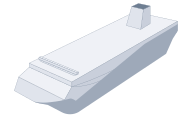
- Cargo gear
- Stern, quarter or side ramps
- Capacity measured in
- Lane metres; car equivalent units (CEU)
- Typical size
- Car carriers commonly 4,000-8,000 CEU; the newest exceed 10,000 CEU
- Cargo type
- Wheeled and tracked cargo
About ro/ro ships
Roll-on/roll-off ships, where cargo is driven aboard over a ramp rather than lifted. The name covers pure car carriers, ro-pax ferries and ro-ro freight ships.
Capacity is measured in lane metres, or in car equivalent units for vehicle carriers. Internal decks are connected by ramps, and several are usually adjustable in height so the same ship can carry cars on one voyage and high machinery on the next.
Loading is very fast, which is what makes short-sea ferry routes and vehicle export trades work. The corresponding design problem is the large open vehicle deck, which has to be managed carefully for both stability and fire safety.
What it carries
How it is built
- Deck heights are adjustable, so the crew can reconfigure the ship between cars on one voyage and high machinery on the next.
- A hull and equipment fit built around one cargo type rather than general trade.
- Purpose-built handling gear, from heavy-lift derricks and stern or side ramps to ventilation systems and refrigeration plant, depending on the trade.
- Structure reinforced where that specific cargo demands it, whether for point loads, vehicle decks or multiple tween decks.
Why it is used
- Handles cargo that no general-purpose ship can take safely or economically.
- Purpose-built handling equipment keeps port time short in trades where shore facilities are limited.
- Often the only practical option for the trade it serves.
What to check before fixing
- A narrow trade means limited availability and less competitive pricing than open-market tonnage.
- Ballast legs are common, because the specialised fit often has no return cargo.
- Many of these trades carry their own regulatory regime on top of normal cargo rules.
Track the ship as well as the box
Follow any vessel and its schedule, with live position, port calls and ETAs across the world fleet.