
Reference
LD-9
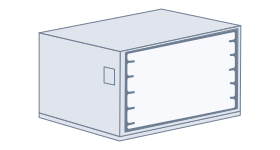
Enclosed container on a P1P base. Full IATA code, rate class, weights, volume and aircraft compatibility below.
- IATA ULD code
- AAP enclosed pallet on P1P base
- Rate class
- Type 5
- Door opening
- 300 x 147 cm (118 x 58 in)
- Aircraft compatibility
- 747, 767, 777, 787, DC-10, MD-11 lower hold
- Maximum gross weight
- Lower hold 4,624 kg (10,194 lb); main deck 6,000 kg (13,227 lb)
- Tare weight
- Canvas door 215 kg (473 lb); solid door 270 kg (595 lb)
- AS1825 volume
- 10.8 m³ (381 ft³)
- Boeing volume
- 10.8 m³ (381 ft³)
About the LD-9
A general-purpose enclosed container fitted to a P1P pallet base, built to the AAP code. The door is canvas with net straps, or solid.
Effectively an LD-7 pallet with an enclosure added, which is why the base dimensions match. Two figures matter when planning: the gross weight rating differs by position, at 4,624 kg in a lower hold against 6,000 kg on a main deck, and tare depends on which door the unit has.
What it carries
How it is built
- A general-purpose enclosed container built onto a P1P pallet base.
- The door is either canvas with built-in net straps, or solid, which is why tare weight differs between builds.
- Aluminium sheet panels on an extruded aluminium frame, kept as light as the structure allows because every kilogram of tare displaces revenue payload.
- A flat base plate with hardened edge rails that engage the aircraft's latch and roller system, so the unit locks into position without separate lashing.
- One or two sides angled to follow the curve of the fuselage, letting the unit fill the belly-hold cross-section rather than leaving dead space.
- A door that is either a canvas curtain with built-in restraint straps or a hinged solid panel, depending on the variant.
- Forklift channels on the variants marked forkable, so the unit can be handled by forklift as well as by dolly and loader.
Why it is used
- Fills the contoured belly space that loose cargo would waste.
- Loads and unloads in a single lift, which is what keeps aircraft turnaround times short.
- Restrains the cargo in flight, so individual pieces need no separate tie-down.
- Interchangeable between airlines and aircraft under the IATA ULD identification system.
What to check before booking
- Tare weight counts against the payload allowance, so a heavier unit carries less cargo for the same rate.
- The load must stay inside the contour; anything above the profile will foul the hold and be rejected at build-up.
- A canvas door resists weather but is not a secure closure.
Track your air cargo
Follow an air waybill from acceptance to delivery with live status and ETAs across every major carrier.